How to Create a Tea and Coffee Station in Your Indian Kitchen
The morning chai is not just a beverage in India. It is a ritual.
It happens at a particular time, in a particular way, with familiar sounds around it — the gas flame, the small vessel, the kettle, the clatter of the kitchen coming to life.
Yet in most Indian kitchens, the chai-making corner is wherever it happened to land: a crowded section of counter, a kettle plugged into the nearest socket, tea tins pushed to the back of a shelf, mugs in another cabinet and the strainer somewhere else entirely.
It works. It has always worked.
But a dedicated tea and coffee station can make that same everyday routine more organised, convenient and enjoyable — without renovating your kitchen or adding more counter space.
The idea is simple: create one defined zone where the things you use for your morning tea or coffee live together and remain easy to reach.
The morning chai deserves better than a corner that happened by accident.

What Is a Tea and Coffee Station?
A tea and coffee station is a dedicated area of the kitchen where everyday essentials such as a kettle or coffee machine, tea and coffee jars, sugar, mugs, strainers and teaspoons are kept together.
In Indian kitchens, where counter space is often limited, using vertical storage can help create this organised corner without sacrificing valuable preparation space.
The Indian Tea and Coffee Station Is Not the Western Coffee Bar
Many tea and coffee station ideas online revolve around espresso machines, bean grinders, pour-over equipment and large countertop coffee setups. Beautiful, certainly. But that is not how most Indian kitchens function every morning.
An Indian tea and coffee corner is more likely to include:
· A kettle or chai-making vessel
· Tea tins or loose tea
· Instant coffee or filter coffee
· Sugar
· Cardamom, ginger or chai masala
· Everyday mugs
· A chai strainer
· Teaspoons
· Perhaps a microwave for reheating
The goal isn't to recreate a café at home.
It is to organise the things you already use every morning so they are easier to access, occupy less counter space and look like they belong together.

Step 1 — Choose the Right Location
Start with the part of the kitchen that makes everyday use convenient.
If you use an electric kettle, coffee maker or microwave, choose a location close to a power socket. Ideally, the station should sit slightly away from your primary chopping and cooking area. A secondary section of the counter, an area near the refrigerator or a free wall-side counter can work particularly well.
Accessibility matters too.
You should be able to make a cup of tea or coffee without constantly crossing the busiest part of the kitchen. And if counter space is limited, don't try to spread everything horizontally. Use the vertical space above it. That is where a rack or multi-level organiser becomes especially useful.
Step 2 — Get the Vertical Storage Right
The biggest problem with many tea and coffee setups is not the number of things involved.
It is that everything ends up on the counter. The kettle is on the counter. Tea tins are on the counter. Mugs are on the counter. Sugar is on the counter. Soon, there is hardly any working surface left. A rack allows you to move everyday items upward while keeping them visible and accessible.
There are two useful ways to build the station.
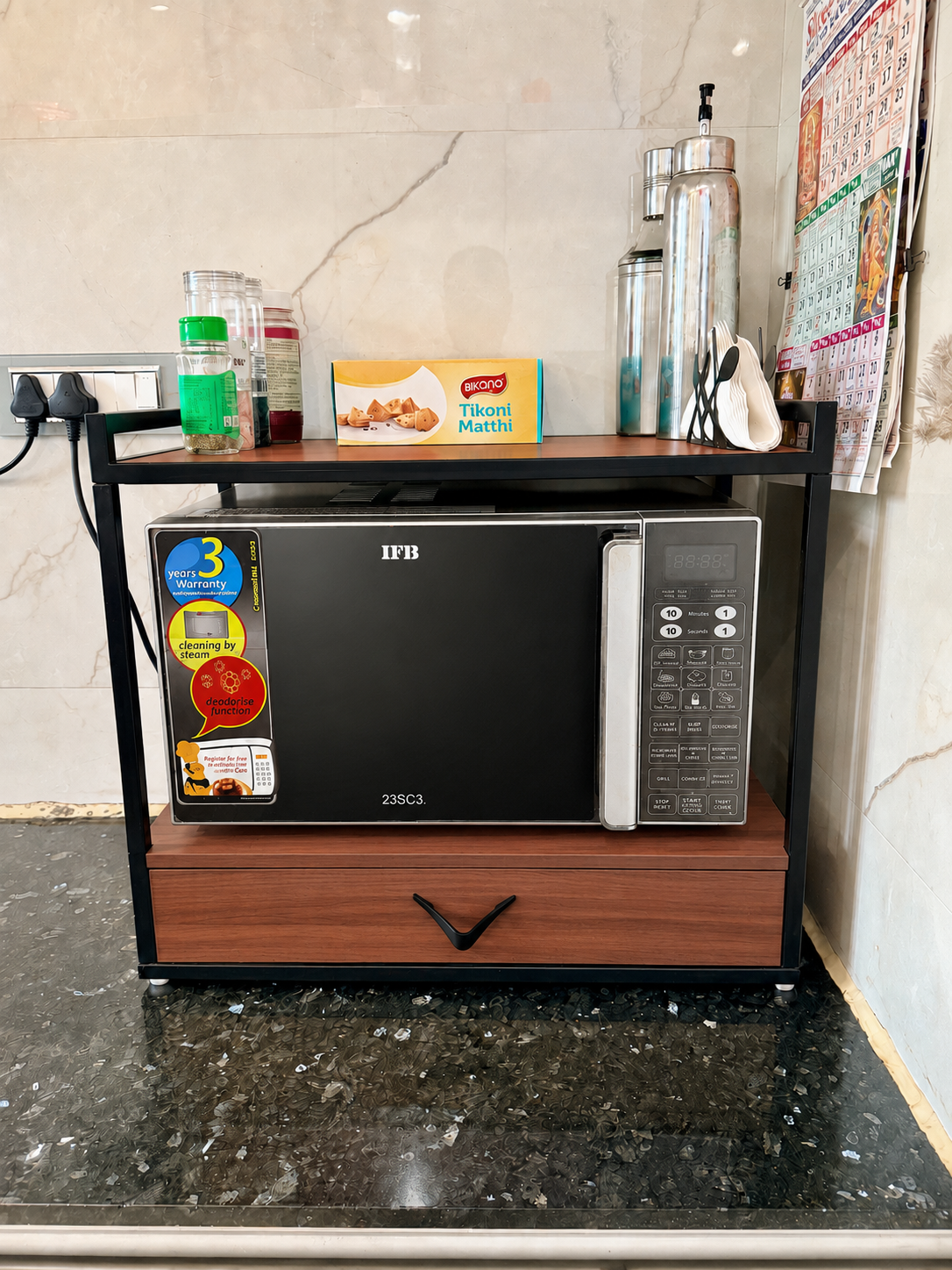
Configuration 1 — Microwave + Tea Station
If your microwave already occupies valuable counter space, keep it on the main platform of the rack.
Use the upper shelf for:
· Tea and coffee jars
· Sugar
· Chai masala
· Everyday mugs
· Small containers
The drawer can hold:
· Tea bags
· Strainers
· Teaspoons
· Napkins
· Kitchen towels
· Small accessories
This lets the microwave and tea setup share the same vertical footprint instead of occupying separate areas of the kitchen.
Configuration 2 — Dedicated Tea or Coffee Station
If you do not need the rack for a microwave, the main platform can become the beverage preparation area itself.
Place your:
· Electric kettle
· Tea maker
· Compact coffee machine
· French press setup
on the main shelf.
Keep jars and mugs on the upper shelf, while the drawer stores smaller accessories. This creates a compact tea or coffee corner with almost everything required for the morning within arm's reach.
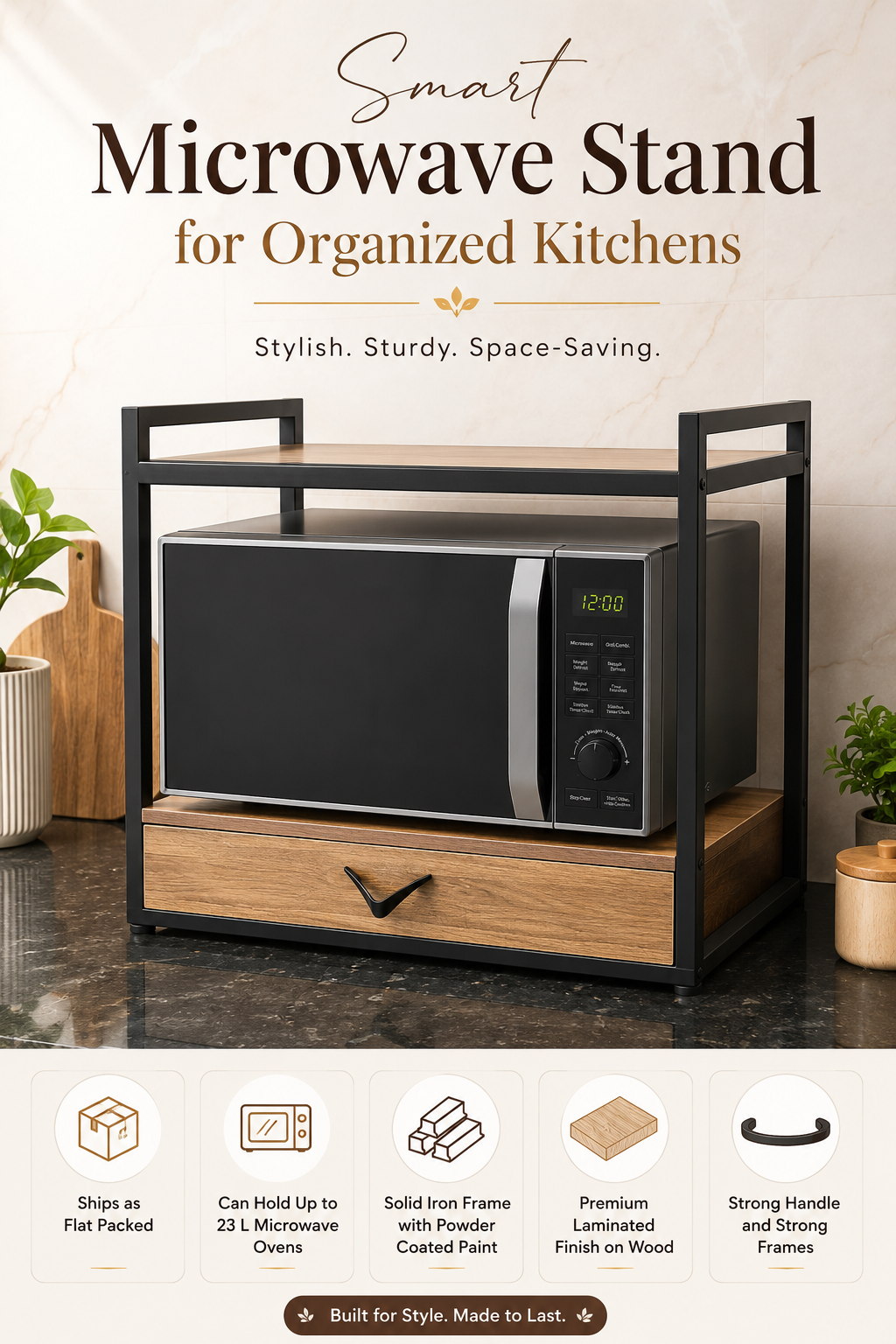
The Sinecraft Powder Coated Microwave Oven Rack with Drawer and Top Shelf can work in either configuration. Its black powder-coated frame and wooden-finish shelves give it more of a furniture-like appearance than a basic utility rack, allowing it to remain visible as part of the kitchen.
Step 3 — Organise the Surface With a Tray
A tea station still needs a small working surface.
The easiest way to stop that surface from gradually becoming cluttered is to define it with a tray.
Keep frequently used items together, such as:
· Chai strainer
· Teaspoon
· Sugar bowl
· Cardamom
· Small tea container
The items inside the tray remain organised while the surrounding counter stays relatively clear. A tray also visually defines the area. Instead of a collection of unrelated kitchen objects sitting beside one another, the setup begins to look intentional. A wooden tray from our Serving Tray Combos works naturally for this purpose and can remain on the counter as the everyday organising surface.
Step 4 — Give Tea, Coffee and Dry Ingredients a Proper Home
Tea tins, coffee, sugar, cardamom and chai masala often end up stored in a mixture of original packaging, reused containers and different-sized jars. Even when everything is technically organised, mismatched packaging can make the corner look cluttered. You don't need expensive containers to fix this. Consistency matters more. Choose jars from the same material family — wood, glass, ceramic or metal — and use them for the ingredients you reach for every day.
For example:
· Tea
· Coffee
· Sugar
· Cardamom
· Chai masala
Our Sheesham Wood Jars with Brass Inlay Detailing can be used for ingredients such as sugar, tea, coffee or cardamom.
The natural wood also coordinates well with wooden shelves and serving trays, helping the entire station look more cohesive.
Step 5 — Keep Everyday Utensils Together
The Indian chai-making routine usually involves the same few tools every day:
· A stirring spoon
· Chai strainer
· Small ladle
· Measuring spoon
· Sometimes a small whisk
These items are easy to lose inside a larger kitchen utensil drawer.
Keeping them at the tea station eliminates that small daily search.
A compact utensil holder allows them to remain upright and accessible without taking over the counter.
Our Pinewood Cutlery Holder, measuring approximately 10 × 5 inches, can hold the everyday tea utensils together while coordinating naturally with wooden trays and jars.
Step 6 — Keep Your Everyday Mugs Within Reach
The mug is the object the entire station ultimately exists to serve.
Most kitchens keep mugs inside an upper cabinet, which works perfectly well — but the same two or three mugs usually get used every morning. Those can live directly at the station. Keep three or four everyday mugs on the upper shelf where they are easy to see and reach. The rest can stay inside the cabinet for guests or occasional use. It is a small change, but it removes another unnecessary step from the morning routine.
A Simple Tea Station Setup
If you want to keep things straightforward, use this arrangement:
Main Platform:
Microwave, electric kettle, tea maker or compact coffee machine
Top Shelf:
Tea, coffee, sugar, chai masala and everyday mugs
Drawer:
Tea bags, teaspoons, strainers, napkins and small accessories
Counter Tray:
Frequently used chai essentials
Utensil Holder:
Stirring spoon, ladle and other daily tools
Everything gets a defined place without requiring additional cabinets or major kitchen changes.
What the Finished Station Looks Like
Stand in front of the finished tea and coffee station and everything you need should be within easy reach.
If you are using the rack with a microwave, the microwave sits on the main platform while mugs, tea jars and sugar live above it. If the rack is being used as a dedicated beverage station, the kettle or compact coffee machine sits on the main platform instead. The drawer holds smaller accessories that would otherwise create counter clutter.
Beside it, a wooden tray keeps the most frequently used chai essentials together. The result is not a dramatic kitchen makeover. It is simply a corner that works better. The chai takes the same amount of time to make. You just spend less of that time searching for things.
For ideas on organising the rest of your kitchen counter, you can also read our guide on how to organise your Indian kitchen counter without a renovation.

What Does a Tea and Coffee Station Cost to Set Up?
A tea or coffee station can be as simple or detailed as you want it to be.
Using the complete Sinecraft setup:
Microwave Oven Rack: ₹4,599
Wooden Serving Tray: approximately ₹1,299–₹1,999 depending on the combination selected
Sheesham Wood Jar Set with Brass Inlay: ₹699 for two
Pinewood Cutlery Holder: ₹699
That brings the complete setup to approximately ₹7,696–₹8,396, depending on the tray or combination selected.
You can also build the station gradually.
Start with the rack and the items already available in your kitchen, then add trays, jars or organisers depending on what you actually use every day.
Unlike permanent cabinetry or a kitchen renovation, the setup can also be moved, rearranged or adapted if your kitchen changes.
The Morning Deserves a Better Corner
You don't need a new kitchen to create a tea and coffee station.
You need a defined place for the things that already make up your morning routine. A rack can use vertical space. A tray can keep daily essentials together. Jars can organise tea, coffee and sugar. A utensil holder can keep the chai strainer and spoons within reach. And a few everyday mugs can stay exactly where you use them. One organised corner can make one of the most repeated routines in the Indian kitchen noticeably easier.
Sinecraft Creations Free Shipping Across India · Same Day Delivery Delhi NCR